What Is European White Oak Lumber? Features and Uses
European White Oak Timber is widely preferred for furniture, flooring, stairs, doors, and interior design due to its durability and natural wood grain...
Wood has been one of the most important natural materials used in construction, decoration, and furniture production for centuries. However, not every wood species offers the same level of durability, appearance, or workability. For those looking for a long-lasting, aesthetic, and strong wood material, one of the most prominent options is European White Oak Lumber.
Thanks to its natural grain structure, high durability, and ability to adapt to different design styles, European white oak is used in a wide range of applications, from furniture and flooring production to staircases, tables, and door manufacturing.
Holding an important position in the professional woodworking industry, European White Oak Lumber is preferred not only because of its durability but also because of its decorative appearance. Its natural color tones, ranging from light brown to warm honey shades, give interiors a refined and inviting look.
For this reason, it can be comfortably used in both modern and classic projects.
In this article, we will examine everything you need to know about European white oak lumber, including its characteristics, areas of use, selection criteria, drying methods, and many other important details.
What Is European White Oak Lumber?
European White Oak Lumber is a natural wood material obtained from oak trees grown in different regions of Europe and processed through cutting, sawing, grading, and specific drying procedures.
European oak generally belongs to the hardwood category and has a strong, dense fiber structure. One of the main reasons it is widely preferred in the furniture and construction industries is its strength and durability.
The natural grain pattern of oak wood is highly distinctive. This characteristic helps create a stronger and more authentic natural wood appearance in furniture and decorative products.
European white oak generally features light brown, beige, and slightly golden tones. Over time, depending on the surface treatments used and the natural aging process, the wood may develop richer and more characteristic tones.
In lumber production, the cutting method, drying process, and grading system directly affect the quality of the final product.
Therefore, when purchasing high-quality European White Oak Lumber, it is important to consider not only the wood species but also the production and drying methods used.
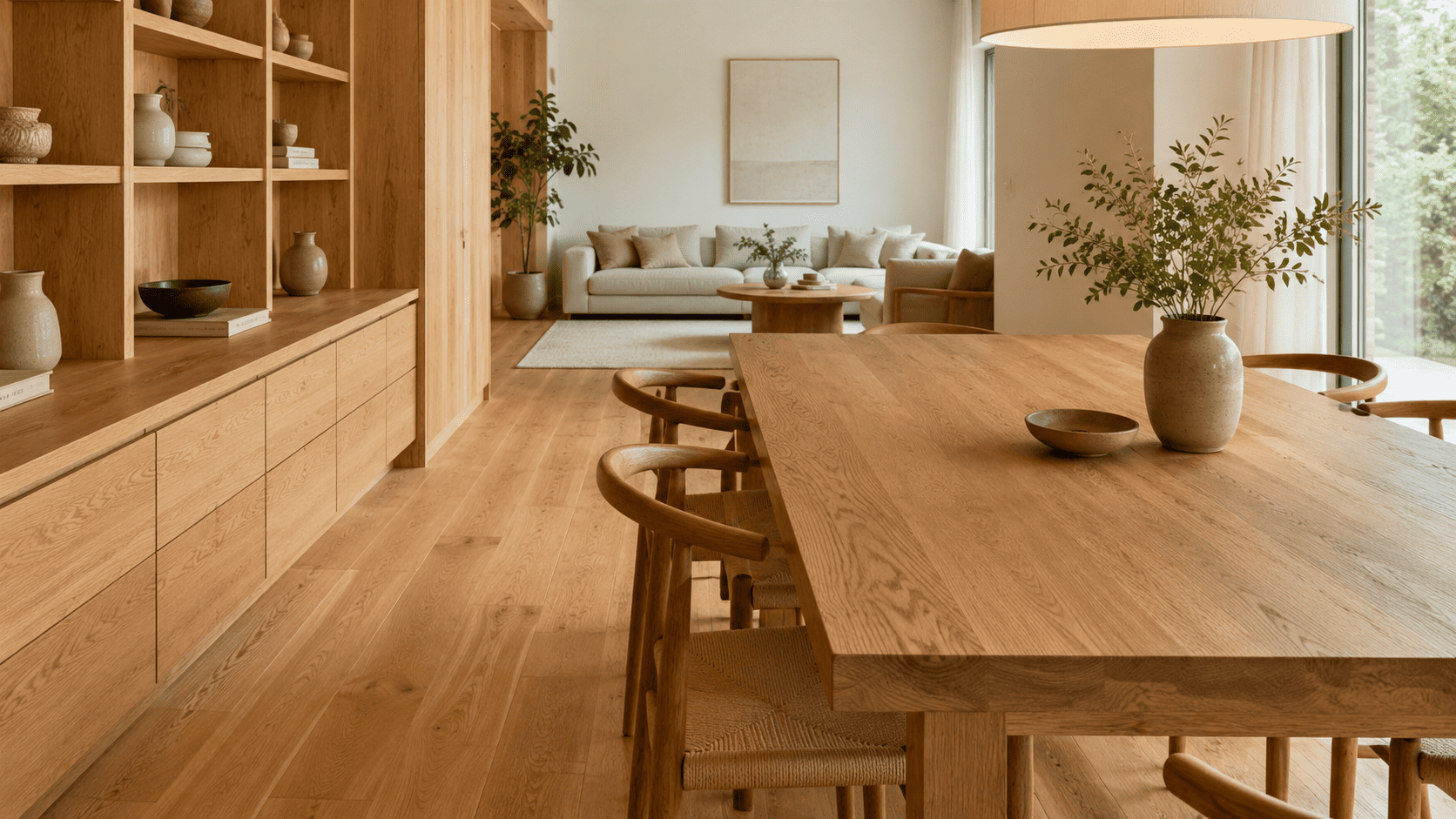
What Are the Characteristics of European White Oak Lumber?
European white oak has many important characteristics that distinguish it from other types of lumber.
One of the most notable is durability.
Thanks to its dense fiber structure, oak lumber is highly resistant to impacts and mechanical stress. For this reason, it is frequently preferred for furniture and flooring applications that require long-term and intensive use.
Some of the most prominent characteristics of European white oak include:
- It has a hard and durable wood structure.
- Its natural grain pattern is distinctive and decorative.
- It is highly suitable for furniture manufacturing.
- When properly dried, it can maintain its shape for a long time.
- It is suitable for various surface treatments.
- Different appearances can be achieved with oil, lacquer, and varnish applications.
- It can be used in both modern and traditional interior projects.
- It contributes to the production of long-lasting furniture.
Thanks to these features, European White Oak Lumber has become one of the preferred materials for high-quality woodworking projects.
Its unique grain pattern also provides a major advantage for designers who want to preserve the natural appearance of wood.
Uses of White Oak Lumber
White Oak Lumber is used in many different industries due to its durability and decorative appearance.
One of its most common applications is furniture production.
It is frequently used in tables, chairs, cabinets, bookshelves, coffee tables, and consoles. One of the main reasons for this is that it allows manufacturers to produce strong furniture that can be used for many years.
In addition, white oak lumber has a wide variety of applications.
Furniture Manufacturing
European white oak is especially preferred by manufacturers of high-quality furniture.
It can be used in solid wood tables, dining tables, office desks, chairs, cabinets, and many other furniture products.
Its natural grain structure gives furniture a strong and distinctive character.
Flooring and Parquet
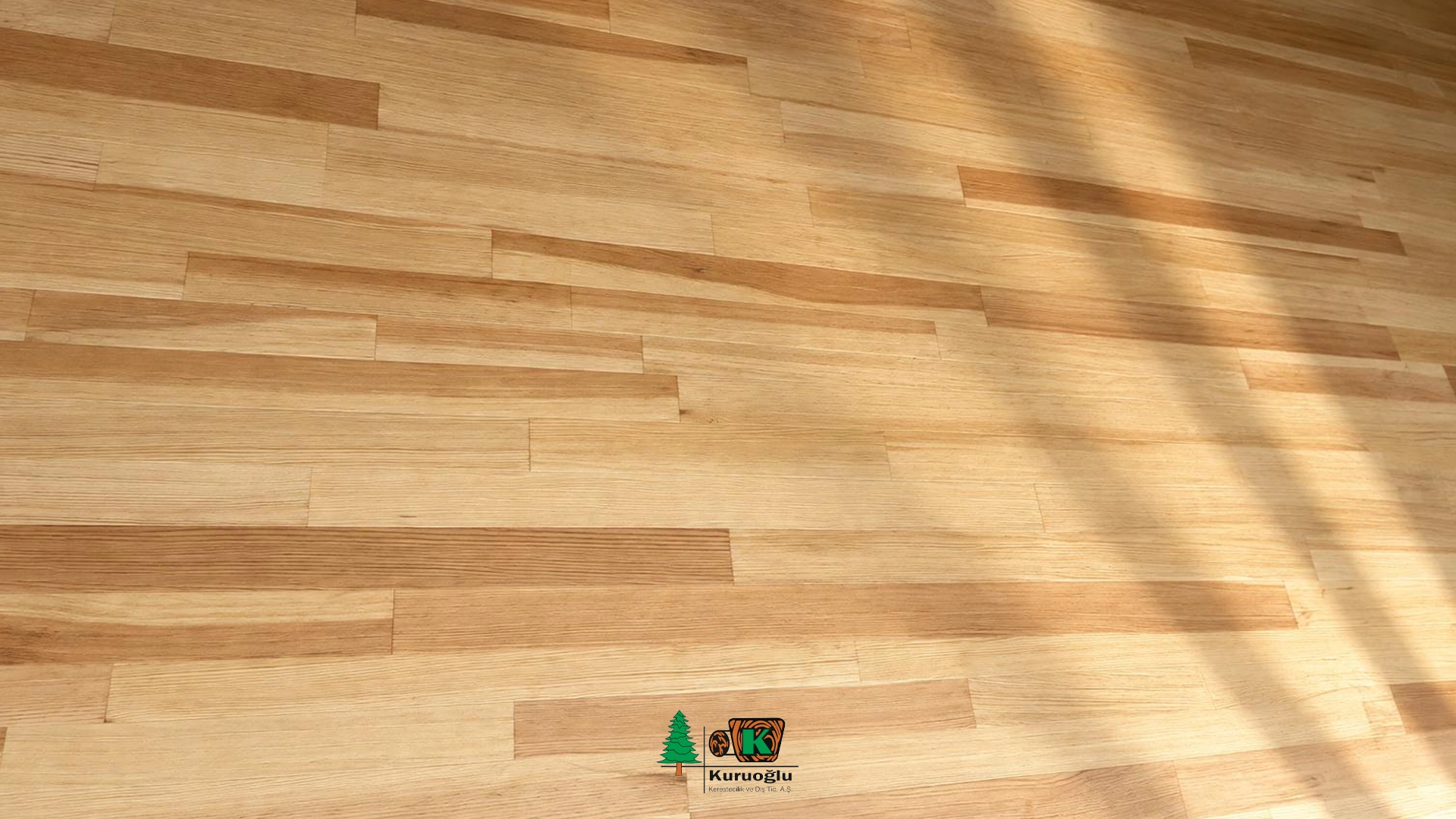
Because oak is a hard wood species, it is one of the most suitable choices for flooring applications.
Oak flooring is widely preferred in homes, offices, hotels, and commercial spaces because of its durability and long service life.
Staircase Production
The wood used for staircase treads must be strong and resistant to repeated use.
For this reason, oak lumber is frequently used in staircase manufacturing.
Door and Window Manufacturing
European white oak can also be used in the production of solid wood doors.
Its natural appearance makes it particularly popular in decorative door applications for villas, hotels, luxury residences, and private architectural projects.
Interior Decoration
Oak lumber is also suitable for wall panels, decorative wood features, and custom interior design projects.
Its natural texture brings warmth to interior spaces, making it a favorite material among interior designers.
Why Is Solid Oak Lumber Preferred?
Solid Oak Lumber is a completely natural wood material generally used in high-quality furniture production.
One of the most important advantages of solid wood products is their long lifespan.
Unlike engineered wood materials such as MDF or particleboard, solid oak consists entirely of real wood.
For this reason, it offers significant advantages in terms of both durability and natural appearance.
Some of the main reasons why solid oak lumber is preferred include its long service life, ability to preserve the natural wood appearance, potential for refinishing through sanding, and its unique grain patterns.
In addition, because every tree has a different grain structure, furniture made from solid oak is never completely identical.
This gives each product a natural and distinctive character.
Especially in premium furniture production, using European White Oak Lumber can increase both the aesthetic value and perceived quality of the finished product.
Why Is Kiln-Dried Oak Lumber Important?
One of the most important stages in lumber production is the drying process.
Freshly cut wood contains a high level of moisture. Over time, this moisture naturally decreases.
However, uncontrolled drying may cause problems such as cracking, warping, twisting, or deformation.
For this reason, professional lumber production generally relies on controlled drying methods.
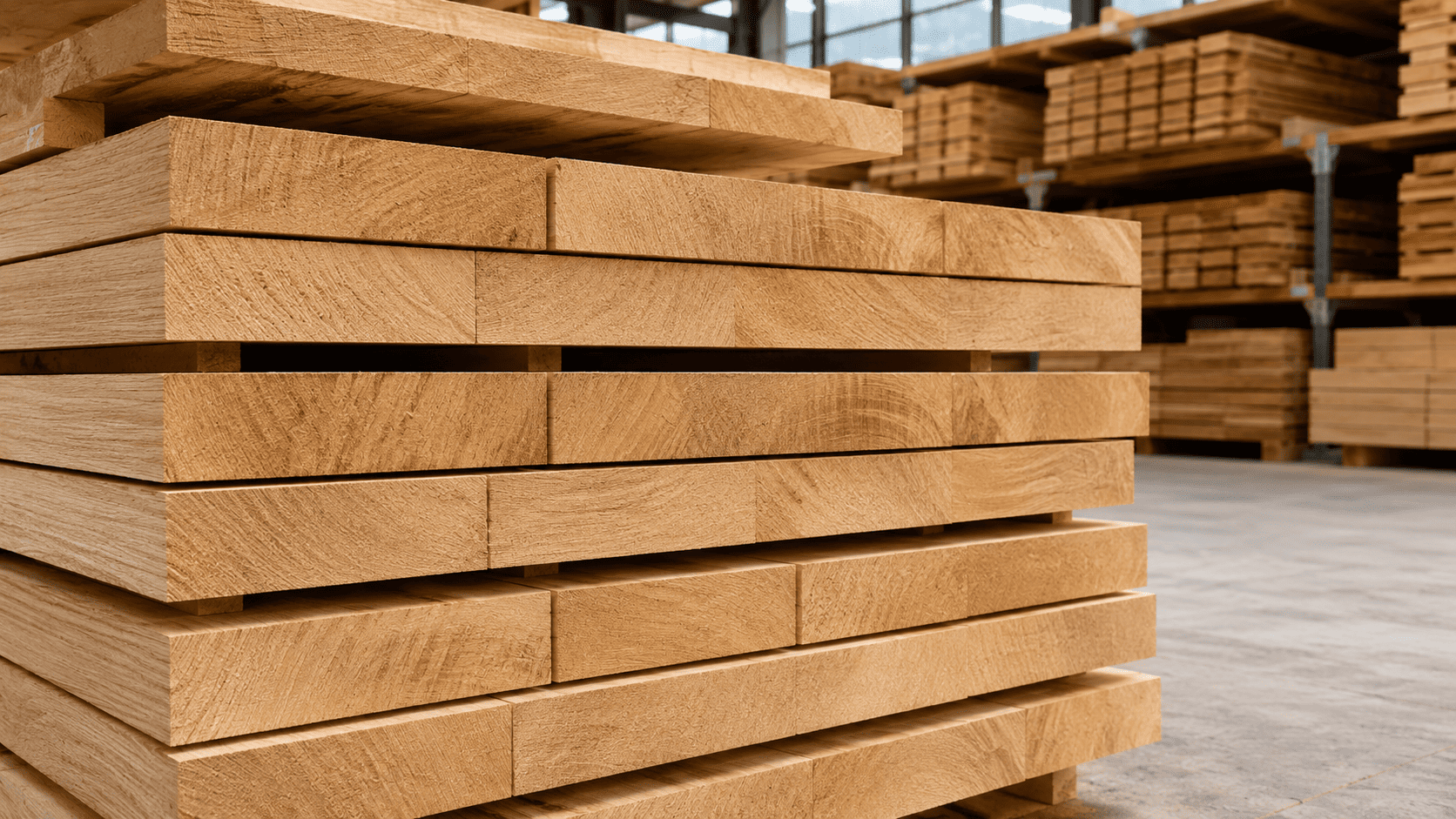
Kiln-Dried Oak Lumber refers to oak lumber that has been dried under controlled conditions until it reaches a specific moisture level.
Industrial production generally uses kiln-drying systems.
Kiln drying allows the moisture inside the wood to be reduced gradually and under controlled conditions.
This process helps make the lumber more dimensionally stable.
In furniture production, it is especially important for the lumber to have an appropriate moisture content.
Otherwise, the wood may continue to move, crack, or deform after the furniture has been manufactured.
For this reason, when purchasing high-quality European white oak lumber, it is strongly recommended to ask about the drying method used.
Differences Between European Oak Lumber and American Oak
In addition to European oak, American white oak is also widely used in the woodworking industry.
Although both species are durable and decorative, they may differ in grain pattern, color tone, and growing conditions.
European Oak Lumber often has a more natural and character-rich grain pattern.
Its color tones may vary from light brown to subtle honey shades.
American white oak, depending on the region where it is grown and how it is graded, may display more uniform color tones.
However, the geographic origin of the tree is not the only important factor.
The cutting technique, lumber grade, knot content, drying process, and storage conditions can also significantly influence the final quality of the product.
Therefore, when purchasing lumber, it is better to evaluate the technical specifications of the product rather than focusing only on whether it is European or American oak.
What Determines Oak Lumber Prices?
Oak Lumber Prices can vary depending on many different factors.
Because wood is a natural material, not every piece of lumber has the same quality, appearance, or structural characteristics.
First of all, the grade of the lumber has a major impact on the price.
Clear or low-knot lumber is generally more expensive.
In addition, the thickness, width, and length of the lumber also influence the cost.
The main factors affecting oak lumber prices include:
The origin of the lumber, quality grade, drying method, moisture level, sawing method, dimensions, knot content, grain structure, and order quantity.
Large-size boards suitable for wide tabletop production may be more expensive because they are more difficult to obtain.
Similarly, boards with specially selected grain patterns can be priced higher than standard-grade products.
For this reason, when researching European White Oak Lumber Prices, it is important to evaluate the lumber grade and technical characteristics rather than focusing only on the price per cubic meter or per piece.
What Should You Consider When Choosing European White Oak Lumber?
Choosing the right lumber is extremely important for the quality of the final product.
Furniture manufacturers, carpenters, interior designers, and architectural firms should evaluate several key criteria when purchasing lumber.
The first step is to determine how the lumber will be used.
For example, the requirements for lumber intended for a tabletop may differ from those for flooring or staircase production.
Some of the most important points to consider include:
Moisture Content
The lumber should be properly dried.
Wood with an unsuitable moisture level may continue to move or deform over time.
Knot Structure
The number and size of knots can affect both the appearance and grade of the lumber.
In rustic designs, knots may be considered a decorative feature, while clear or low-knot lumber may be preferred for more minimalist projects.
Crack Inspection
The surface and end sections of the lumber should be checked for significant cracks.
Grain Pattern
One of the most attractive features of oak is its natural grain pattern.
Choosing boards with a grain pattern suitable for the intended design can lead to more aesthetically pleasing results.
Dimensions
The thickness, width, and length of the lumber should be suitable for the final product.
Using lumber with appropriate dimensions can also reduce waste during manufacturing.
Advantages of Furniture-Grade Oak Lumber
Furniture-Grade Oak Lumber is among the most valuable wood materials used in tables, chairs, cabinets, and decorative furniture.
The natural hardness of oak helps furniture remain durable for many years.
In addition, oak is highly versatile when it comes to finishing and surface treatments.
Natural oils can be used to preserve the wood's original appearance.
Varnish can provide a smoother or glossier finish.
Staining techniques can also be used to adapt the wood to different interior design styles.
In recent years, the increasing popularity of natural and minimalist interior design trends has also increased demand for solid wood furniture.
As a result, European White Oak Lumber has become one of the preferred materials in both residential and commercial interior design projects.
The Role of European White Oak Lumber in Interior Design
Natural wood materials create a warm and inviting atmosphere in interior spaces.
European white oak, in particular, can help make spaces feel brighter and more open thanks to its lighter natural tones.
For this reason, it is frequently used in Scandinavian, modern, rustic, and minimalist interior design styles.
For example, a light-colored oak dining table can create a highly natural and elegant appearance in an interior dominated by white, cream, or neutral tones.
Similarly, oak wall panels or oak staircase treads can bring warmth and character to a space.
Another major advantage of oak is its ability to combine easily with other materials.
It works well with metal, glass, marble, and natural stone, allowing designers to create modern and sophisticated interiors.
This versatility makes European White Oak Lumber an excellent choice for many interior architecture projects.
How Should Oak Lumber Be Stored?
Proper storage conditions are extremely important for preserving lumber quality.
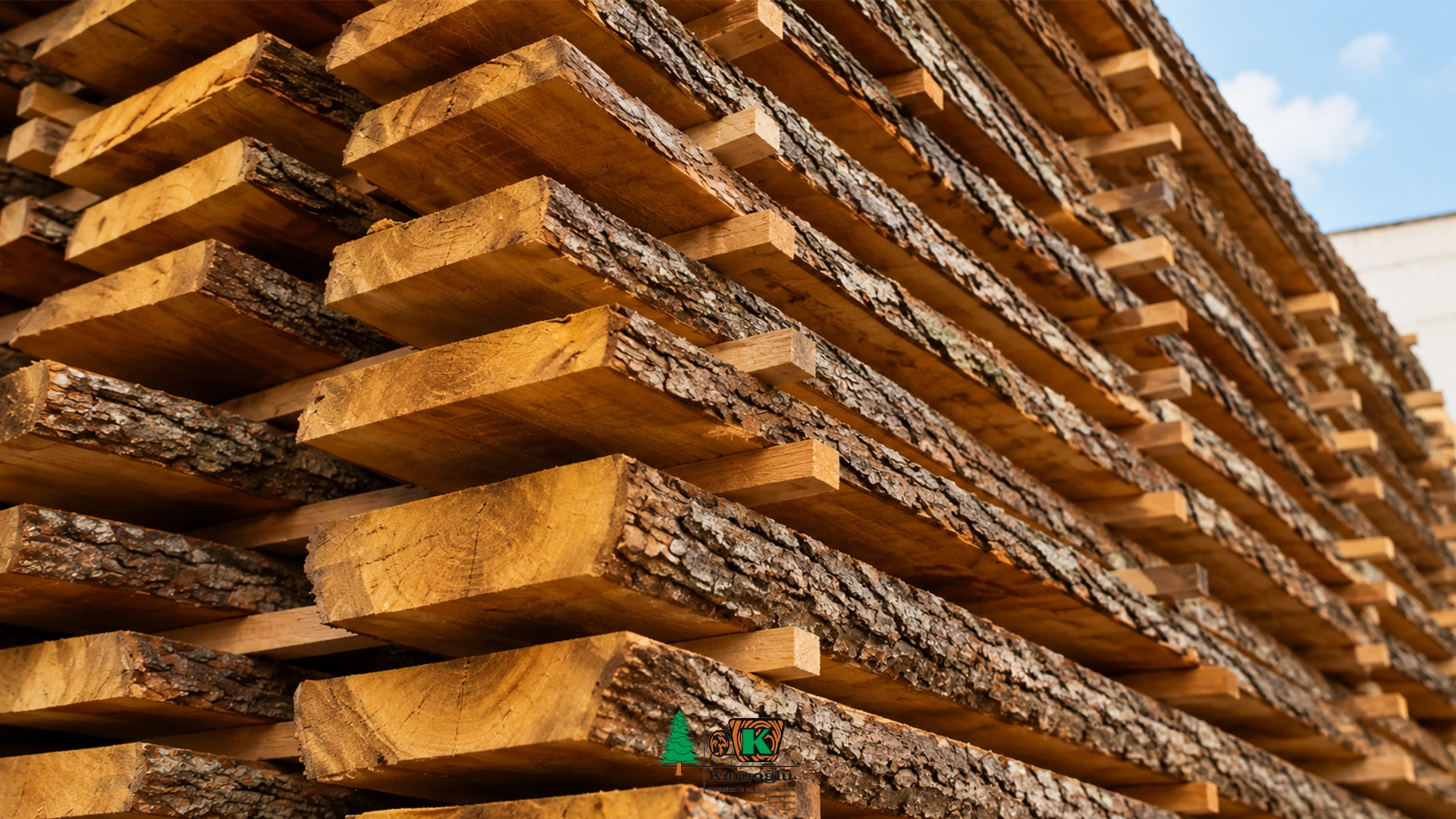
Kiln-dried lumber should not be stored in areas with excessive humidity, as the wood may absorb moisture again.
Lumber should ideally be stored in dry, well-ventilated areas protected from direct contact with rain or water.
It is also recommended to keep lumber away from direct contact with the ground.
Pallets, spacers, or support blocks can be used to elevate the lumber.
When stacking lumber, spacers should be placed between layers to improve air circulation.
This method can help preserve the shape and stability of the wood, especially during long-term storage.
Is European White Oak Lumber a Sustainable Choice?
Sustainable material use is becoming increasingly important in the construction and furniture industries.
Wood can be a renewable natural resource when it is sourced through responsible forestry practices.
However, the sustainability of lumber largely depends on the forest source and production system.
For this reason, especially in large-scale projects, it is important to ask about the origin of the lumber.
Choosing oak products sourced from responsibly managed forests can contribute to the protection of natural resources.
In addition, high-quality European White Oak Lumber offers a long service life, helping furniture and interior products remain in use for many years.
Long-lasting products can reduce the need for frequent replacement and therefore contribute to lower resource consumption.
Who Should Use European White Oak Lumber?
European white oak lumber can be used by professionals and businesses operating in many different industries.
The main user groups include:
Furniture manufacturers, carpentry workshops, interior designers, architectural firms, flooring manufacturers, door manufacturers, staircase manufacturers, and custom woodworking companies.
It is also highly suitable for small workshops producing custom or handmade furniture.
For projects where high quality, durability, and a natural appearance are essential, oak lumber offers a strong and reliable solution.
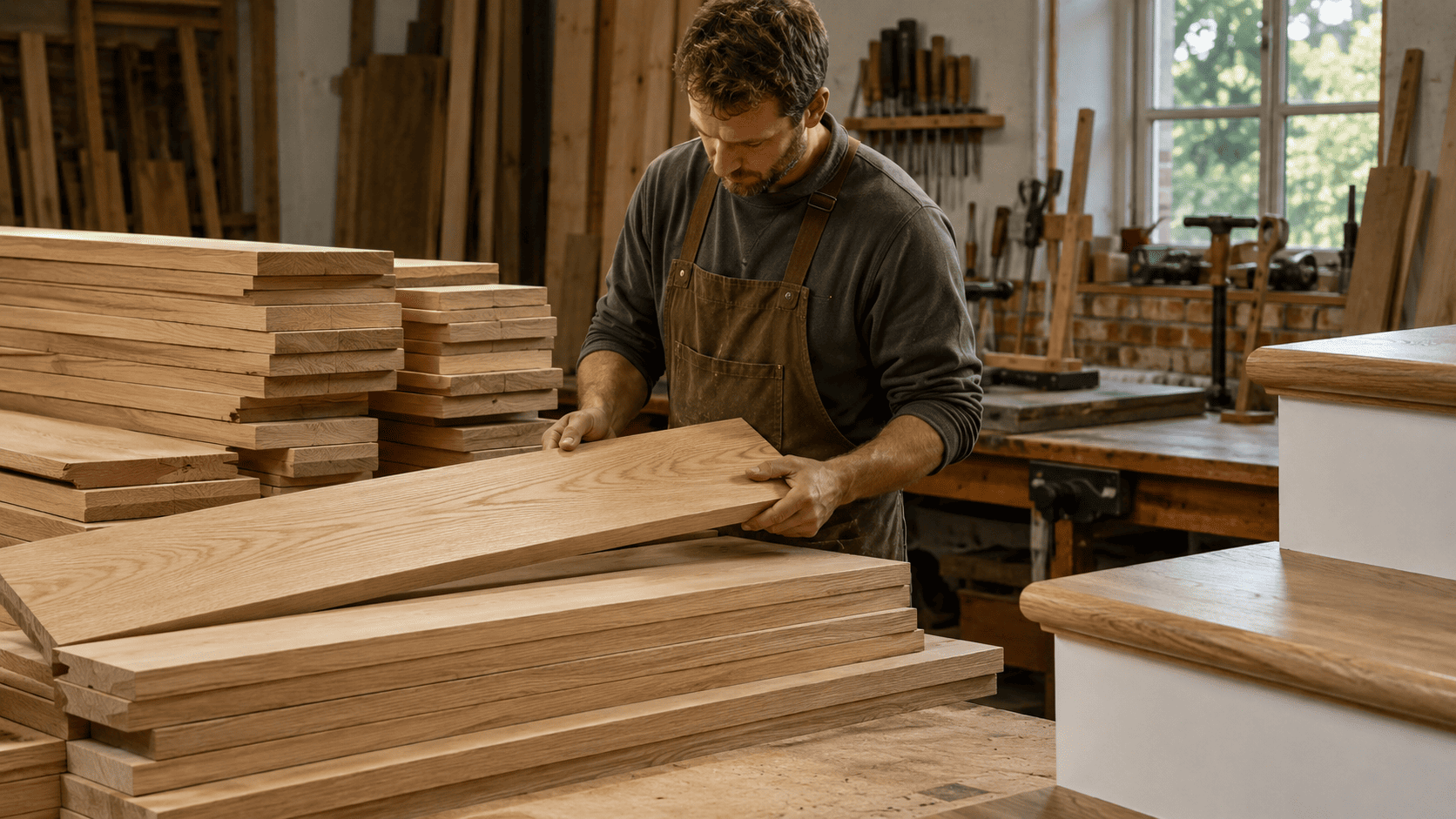
Questions to Ask Before Buying European White Oak Lumber
Before placing an order, it is important to obtain certain technical information from the supplier.
First, you may want to ask which country or region the lumber comes from.
You should also ask whether the wood has been kiln-dried and what its approximate moisture content is.
The quality grade should also be clearly specified.
Other details to confirm before ordering may include:
Lumber thickness, available width ranges, length options, minimum order quantity, knot content, drying method, and packaging method.
For large-volume orders, reviewing samples or detailed product photographs may also be beneficial.
This allows you to select the most appropriate European White Oak Lumber for your project.
Workability of European White Oak Lumber
In woodworking, durability is not the only important criterion. Workability also plays a major role.
Although oak lumber is a hard material, it can be successfully cut, routed, sanded, drilled, and shaped when proper equipment is used.
Because of its dense fiber structure, professional-grade cutting tools may provide cleaner and more precise results.
After sanding, the surface can become extremely smooth.
Natural oil, varnish, lacquer, or other protective finishes can then be applied.
The grain pattern of oak becomes even more visible after finishing.
For this reason, many furniture manufacturers prefer oils and transparent finishes that enhance the natural grain rather than completely covering the surface.
Conclusion: Why Is European White Oak Lumber a Valuable Wood Material?
In the woodworking industry, the quality of the material directly affects the durability, appearance, and service life of the final product.
European White Oak Lumber holds an important place in furniture and interior design due to its strong fiber structure, natural grain pattern, and wide range of applications.
It can be used in tables, chairs, cabinets, flooring, staircases, doors, and decorative woodworking applications.
Properly dried and correctly graded oak lumber contributes to the production of strong and long-lasting products.
However, lumber should not be evaluated based on price alone.
Its origin, drying method, moisture content, knot structure, dimensions, and quality grade should all be taken into consideration.
Selecting the right lumber for professional projects can improve manufacturing quality while also reducing waste.
For those looking for natural beauty, high durability, and long-term performance, European White Oak Lumber continues to be one of the most reliable and prestigious hardwood options available.